
How to Check Criminal History in Lee County
Begin with the record that can answer the question. The Lee Circuit Court Clerk holds both District and Circuit Court files. District Court handles misdemeanors, violations, traffic cases, ordinance matters, and the early phase of a felony case. Circuit Court handles a felony after indictment. The sheriff, Beattyville Police Department, and Kentucky State Police keep their own agency reports. Kentucky State Police also runs the central state criminal-history repository, while the Kentucky Department of Corrections publishes custody and supervision data through KOOL.
Use a full legal name, any prior names, an approximate year, and a case or report number when known. Search with broad spelling first. Then narrow the result with a birth date or identifier that the official system permits. A name match alone is not enough, especially when a court index omits a full document image or a corrections record lists a place of confinement without the conviction court.
- Ask the Lee Circuit Court Clerk to search both District and Circuit records for local charges and outcomes.
- Use Find a Court Date for scheduled hearings or CourtNet 2.0 when its registration rules fit the search.
- Contact the agency that made an arrest for its incident report and the actual jail for the booking record.
- Use Kentucky State Police, AOC, KOOL, or the FBI only for the distinct statewide or federal product each provides.
- Order the signed order or certified copy from the Lee County record custodian when the result must be official.
Note: A blank online result does not prove that no Lee County record exists, because older files, recent entries, and restricted cases may be absent.
Lee County Criminal Records on Main Street
One courthouse address connects three different record routes. The Lee Circuit Court Clerk is on the second floor at 256 Main Street in Beattyville. The office keeps Lee County District and Circuit case files, accepts requests for copies, and can tell a caller when an older file has moved to a records facility. The official number is 606-464-8400, the fax is 606-464-0144, and the published weekday hours are 8 a.m. to 4 p.m. If a file is stored elsewhere, ask the clerk for both the facility and the file-locator number.
The Lee County Sheriff also works from the courthouse, but the sheriff's arrest and investigative files are not court case files. Sheriff Joseph C. Lucas can be reached at 606-464-4120 or by mail at P.O. Box P, Beattyville, KY 41311. The County Clerk is another elected office and should not be confused with Circuit Court Clerk Tyler Phillips. The County Clerk's main public-record work concerns other county records, not the criminal dockets kept by the Circuit Clerk.
The Kentucky Court of Justice Lee County page shows the courthouse and its clerk details.
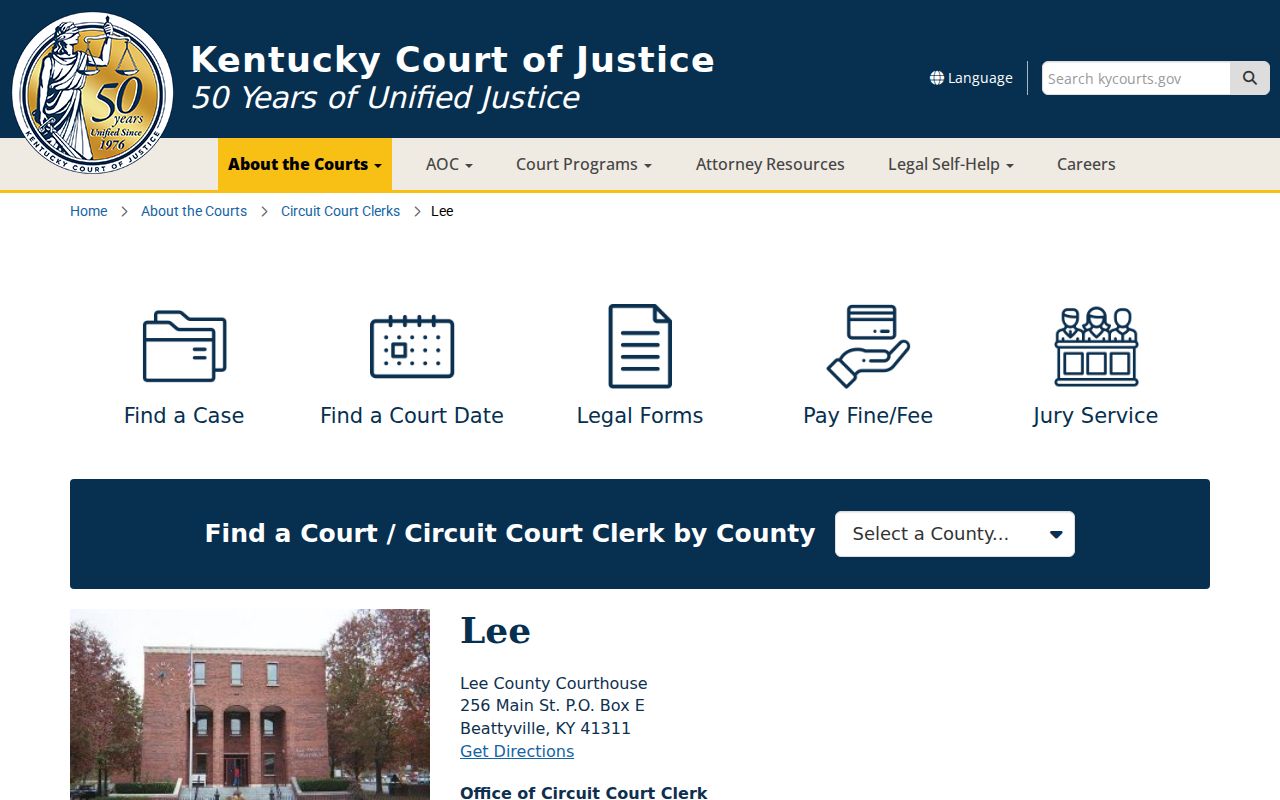
The official page is the best place to recheck office hours, payment methods, and the clerk's current instructions before a trip.
Official Kentucky Background Checks
Kentucky State Police, Criminal Identification and Records Branch is the state repository. It does not provide an unrestricted instant public name search. A member of the general public may request an adult Kentucky criminal history with that adult's permission. The current KSP fee is $20 by check or money order payable to the Kentucky State Treasurer. Fingerprints are not required for that product, and KSP reports that mailed requests average ten business days.
The KSP background-check page explains the approved forms and submission routes.

This is an identity-based Kentucky repository response, not a certified Lee County judgment and not a live arrest feed.
IdentoGO by IDEMIA captures prints when an agency or organization has statutory authority for a Kentucky-and-FBI check. The published capture charge is $20, with any requesting-agency charge added. A service code controls enrollment, and no Lee County location was verified in the research. The IdentoGO Kentucky enrollment system identifies the current site after the proper code is entered.
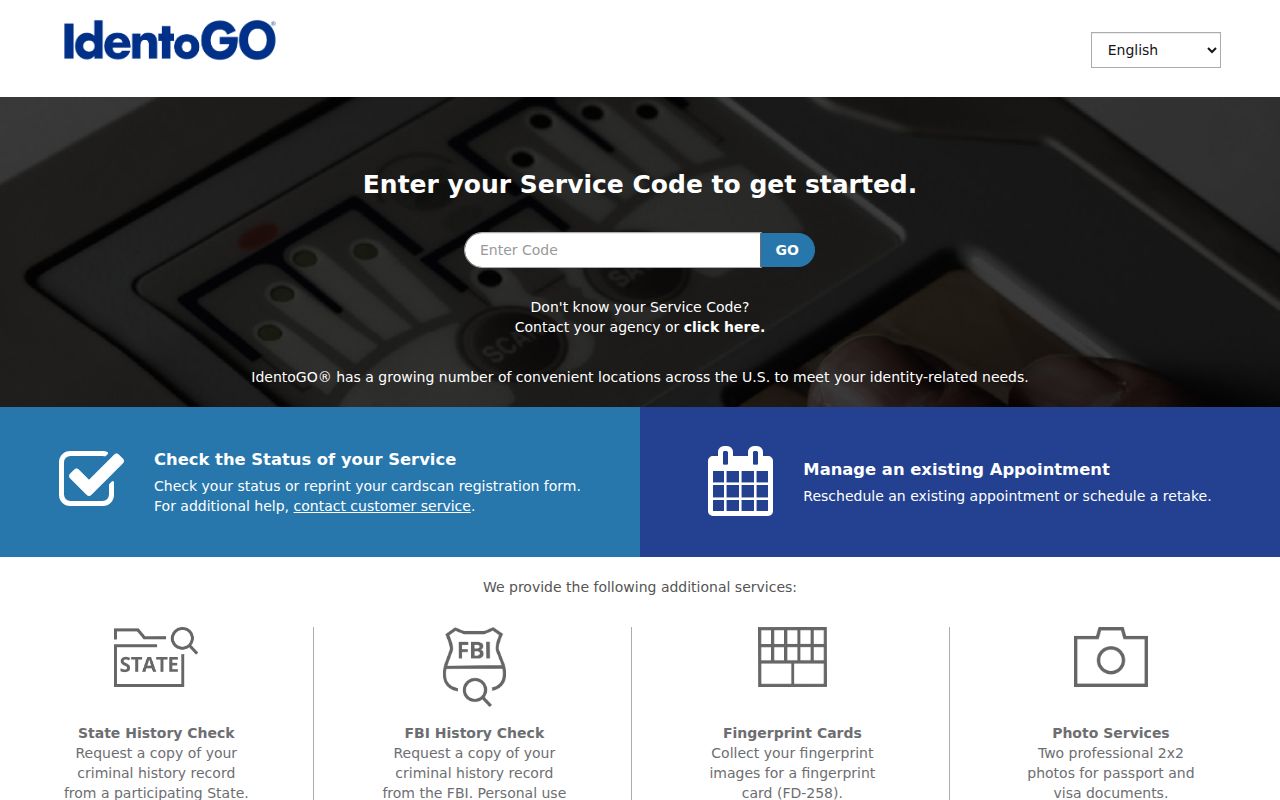
The appointment route should be used only for the authorized program tied to that service code.
Lee County Criminal Record Sources Compared
Three official products often get called a background check, yet they answer different questions. The Lee County clerk supplies the local court file and certified orders. Kentucky State Police supplies the consent-based repository history. Kentucky Court of Justice offers statewide AOC court-record reports through FastCheck or a One-Time Request. An AOC report can show District and Circuit activity from Kentucky counties, but it states that it is not an official court record.
| Question | Best source | Main limit |
|---|---|---|
| What did a Lee County court file? | Lee Circuit Court Clerk | Local case file only |
| What does Kentucky's repository disclose with consent? | Kentucky State Police | Subject permission and product scope |
| What Kentucky court activity appears statewide? | AOC FastCheck or One-Time Request | Not a signed judgment |
| What does my FBI identity history show? | FBI Identity History Summary | Subject-only request with fingerprints |
The AOC background-check page describes its statewide court report and access methods.
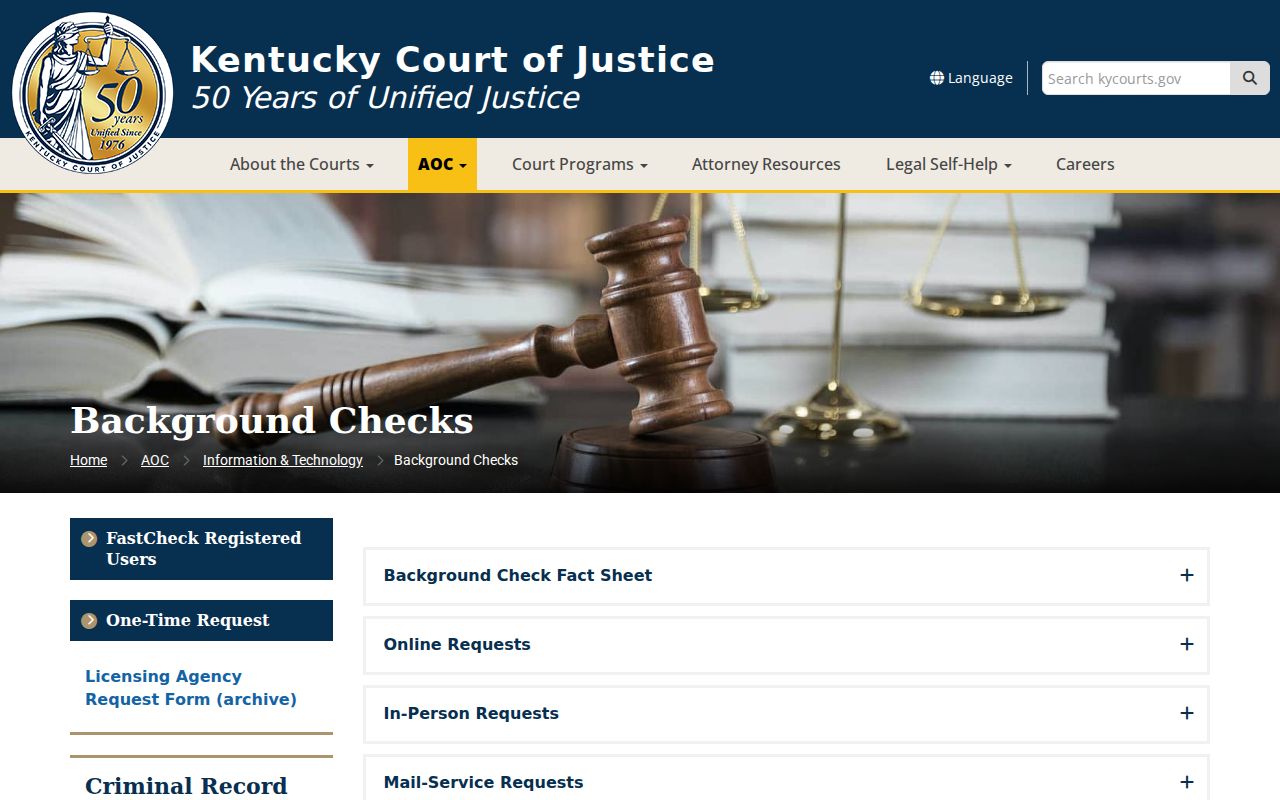
Use the county clerk when the search must end with a signed order, certified disposition, or full local file.
A person reviewing their own federal file can use the FBI Electronic Departmental Order service. The federal fee is $18 and fingerprints are required.
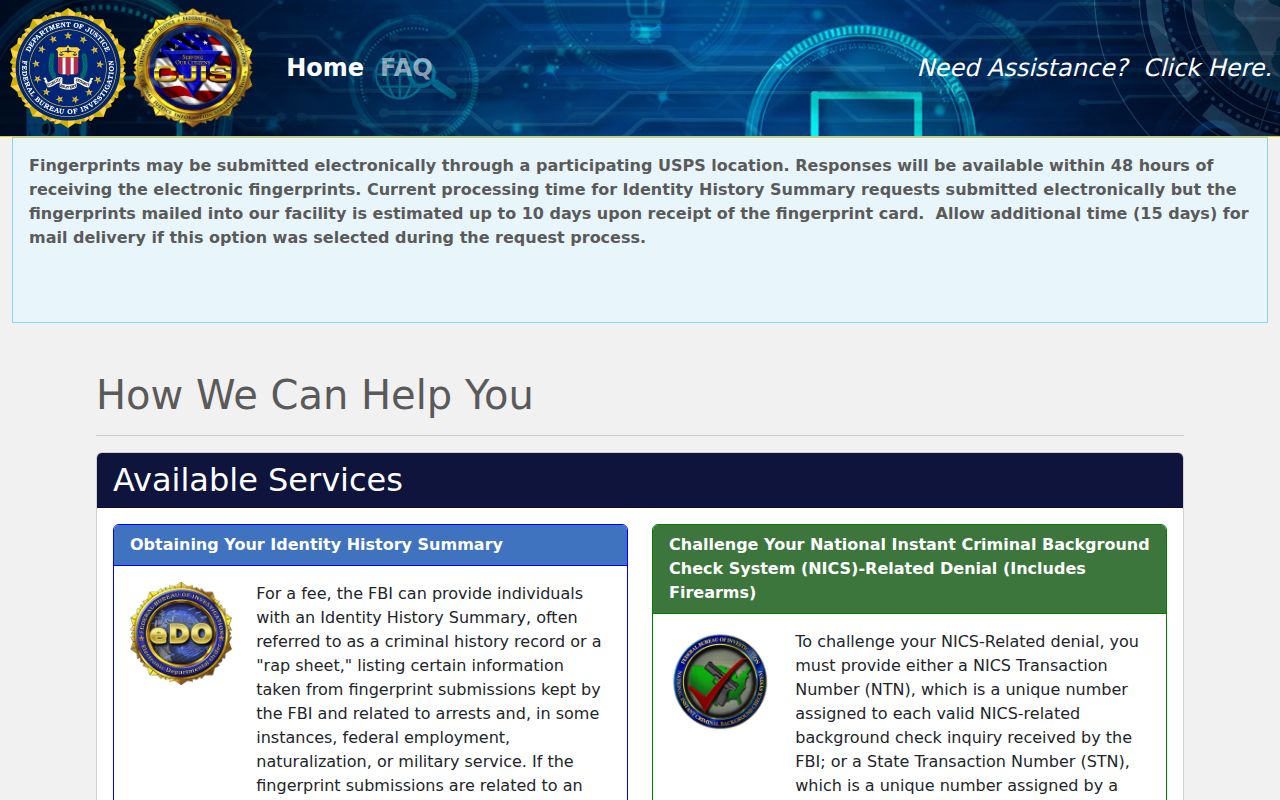
An FBI response draws on records reported to the federal system and does not certify a Lee County court outcome.
Types of Criminal Records
Lee County criminal records develop at different points in the justice process. A police agency writes an incident or arrest report. A detention authority creates a booking file. District or Circuit Court creates the case docket and orders. Kentucky State Police receives qualifying arrest and disposition data for repository matching, while the Department of Corrections records state custody and supervision. Each source can be accurate within its scope while still telling only part of the story.
- Incident and arrest reports: agency accounts of an event, alleged offense, and police action.
- Booking records: intake time, identifiers, holding charges, bond, and custody facts from the receiving jail.
- Court case files: complaints, indictments, hearings, pleas, orders, outcomes, and sentence entries.
- Repository histories: identity-matched Kentucky arrest and disposition data within KSP disclosure rules.
- Corrections and registry entries: state custody or supervision details and separate statutory registration information.
A warrant is its own court and law-enforcement record. Lee County has no verified public active-warrant database. Check the sheriff for an arrest-warrant inquiry and the clerk for a bench warrant tied to a court case. Sealed, unserved, or active-investigation material may be withheld.
Lee County Criminal Records and State Custody
Lee Adjustment Center creates a common false match. The facility is a Kentucky Department of Corrections contract prison in Beattyville, not the Lee County jail. Its residents may have convictions from anywhere in Kentucky. A KOOL result that lists Lee Adjustment Center therefore shows a place of state confinement. It does not show that Lee County police made the arrest or that a Lee County court entered the conviction.
KOOL is still useful for a person in Kentucky DOC custody or under state supervision. Search by as little information as needed, then compare the DOC or PID number, offense, conviction county, sentence, location, and status. Kentucky DOC warns that information less than 120 days old may not be finalized. The Lee County court file remains the sound source for the actual local judgment and procedural history.
Federal custody is separate again. The Federal Bureau of Prisons inmate locator searches federal custody records by a federal identifier or name fields.
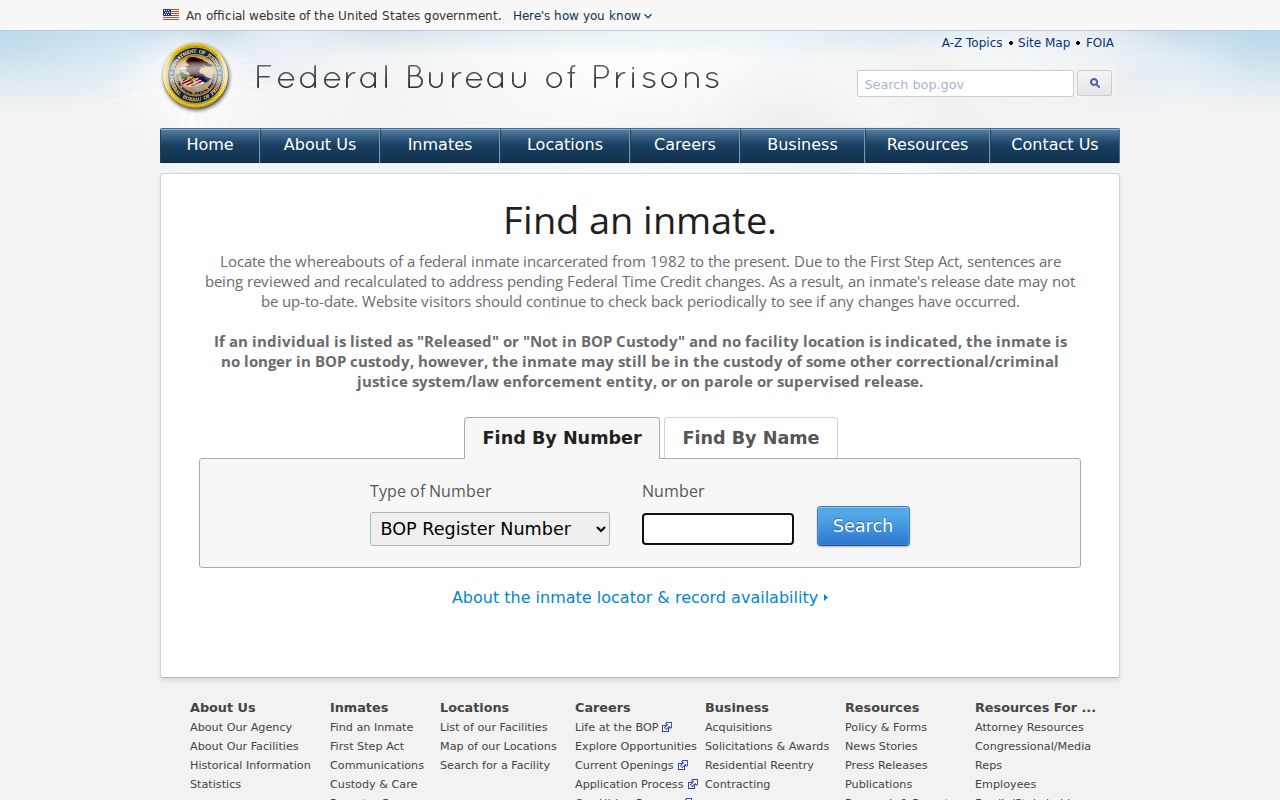
A federal locator result will not reveal a Three Forks booking, a Kentucky DOC placement, or the disposition of a Lee County case.
What a Lee County Criminal Record Shows
The fields depend on the custodian. A Lee County court file may show the county, case number, division, original charge, amended charge, hearings, plea, disposition, judgment, sentence, financial entries, and clerk notes. A booking file can show the intake date, booking number, arresting agency, holding charge, bond, custody status, fingerprints, photograph, and limited identity facts. The repository may join arrest cycles and reported outcomes to an identity, but a late or incomplete disposition report can leave a gap.
| Name and identifiers | Legal name, aliases, birth information, and agency numbers where public and relevant. |
|---|---|
| Arrest and booking | Arresting agency, intake date, booking number, holding charge, bond, and custody status. |
| Charges and statutes | Original and amended allegations, Kentucky statute references, and the court division. |
| Disposition | Dismissal, acquittal, conviction, or another recorded procedural result for each charge. |
| Sentence | Confinement, probation, costs, restitution, or other terms stated in the judgment. |
| Custody or supervision | Current DOC location, release dates, or supervision data when the corrections system reports it. |
Read the original charge, any amendment, and the disposition together. An arrest allegation may be changed, dismissed, or replaced before judgment. The Lee County criminal court case record is the best route for tracing that change through filed orders.
Lee County Criminal Booking Fallbacks
Three Forks Regional Jail is the regional booking channel serving Lee, Owsley, and Wolfe counties. Its official website links a JailTracker current-custody interface. The research did not find a separate historical Lee County arrest blotter. For a recent custody question, check the official Three Forks roster, call Jailer Justin Shuler at 606-567-0045, and contact the arresting agency. VINELink Kentucky can add custody-status search and notification, but it does not provide the final court outcome.
Confirm the holding facility before travel or a records request. Official sources list different Three Forks street addresses, so a caller should verify the current destination. A person arrested in Lee County may be transferred, and a person held nearby may have been arrested elsewhere. The booking custodian can provide the intake file; the sheriff, Beattyville Police, or KSP provides its own incident report; the clerk provides the later court case.
That sequence is: arresting agency report → regional booking entry → District Court filing → Circuit Court case if indicted → final disposition reported to state systems.
Note: An arrest and a booking record show custody on an allegation, not guilt or the final charge.
Public Access Laws
The Kentucky Open Records Act, KRS 61.870 through 61.884, provides the main request framework. Send the request to the agency that made or keeps the record. Ask for an existing document and state whether inspection or copies are wanted. A signed request may be delivered, mailed, faxed, or emailed. Kentucky agencies generally have five business days after receipt to respond in writing, though an exemption may permit a redaction or withholding.
Key Kentucky laws:
KRS 61.872 sets the basic inspection and request process.
KRS 61.878 lists exemptions that can support a redaction or denial.
KRS 61.880 requires written agency action and provides Attorney General review.
KRS 17.150 governs access to specified law-enforcement intelligence and investigative material.
Inspection during regular hours has no inspection fee. Ordinary paper copies generally may not exceed ten cents per page unless another law or a documented higher actual cost applies. An office does not have to answer a question or create a new list. Ask for a written statutory reason if part of a Lee County criminal record is denied.
Lee County Criminal Record Request Timing
Five business days is a response rule, not a promise that every record will arrive in five days. An agency may say that a file is in active use, stored elsewhere, or needs lawful review and redaction. The response should explain the reason and the earliest date when the record will be available. If the custodian denies access, it should cite the exemption and connect that law to the material withheld.
The Kentucky Attorney General publishes a standard open-records form and reviews qualifying disputes under KRS 61.880. The Attorney General open-records resource is a practical source for the current form and appeal process.
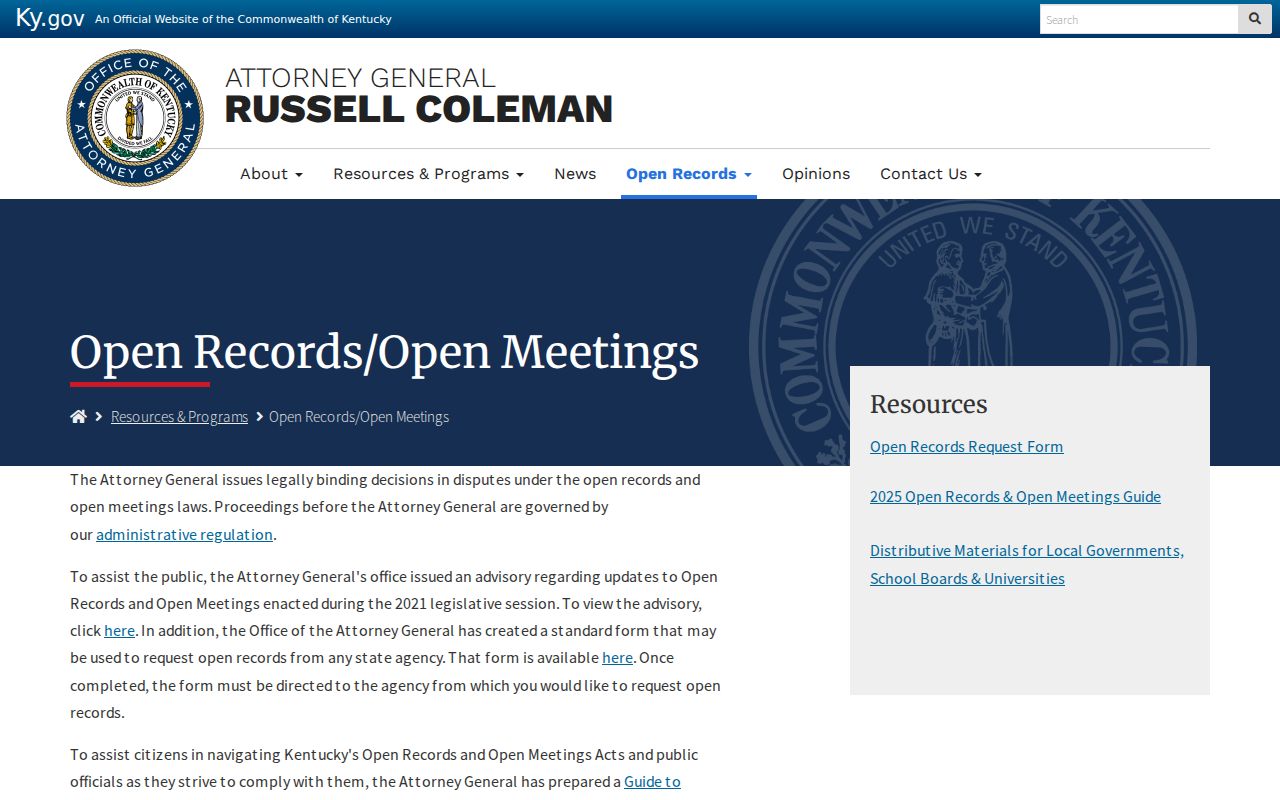
A Lee County request should name the custodian, describe the event or existing file, give a date range and location, and include a known report, booking, or case number.
Sealed, Expunged & Restricted
Public access does not cover every criminal record. Juvenile, mental-health, and domestic-violence case types are excluded from routine AOC reports. Agencies may redact victim data, personal identifiers, or qualifying active investigative details. The Kentucky Sex Offender Registry also withholds specified sensitive fields such as victim identifiers, DNA, fingerprints, Social Security numbers, government identification numbers, and vehicle registration data.
Kentucky expungement can remove eligible records after the statutory process. Most qualifying cases dismissed with prejudice or ending in acquittal on or after July 15, 2020 are automatically expunged after 30 days, apart from traffic cases. Other relief requires the correct form and, for many conviction cases, an eligibility certification. A dismissal on a public docket should not be mistaken for proof that all related records have already been removed.
The Kentucky Court of Justice expungement page provides the current certification and filing process.
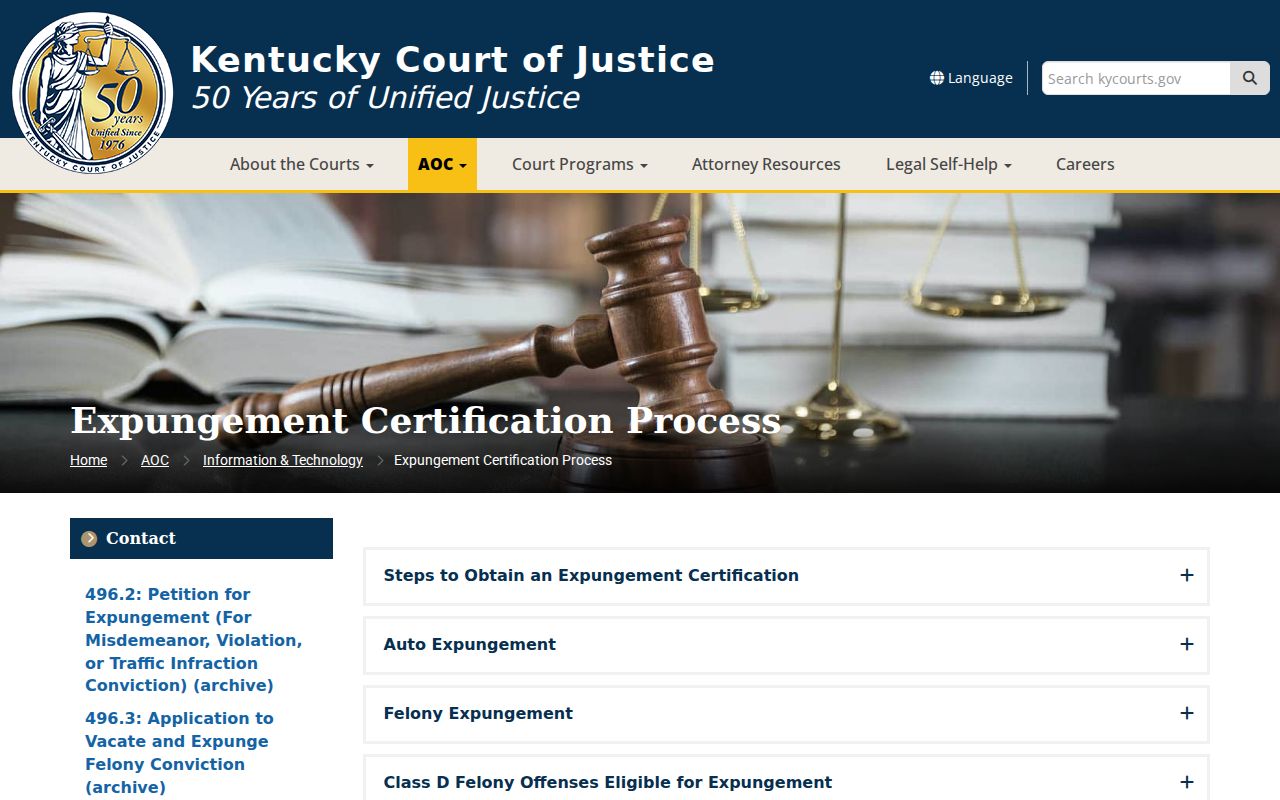
Use the current court forms because Kentucky revises them, and file the petition with the clerk in the county of the original case.
Lee County Criminal Record Expungement Costs
The first step for a conviction petition is usually the Kentucky AOC eligibility certification. An online request requires registration and email verification. A person may also use the drive-through or mail the RU-009 form. The certification costs $40. After it is issued, the applicant chooses the form that matches a misdemeanor, eligible felony, acquittal, dismissal, or failure to indict, then files in Lee County if that is where the case began.
| Item | Published amount |
|---|---|
| Expungement eligibility certification | $40 |
| Misdemeanor conviction petition | $100 per case |
| Eligible felony application filing | $50, nonrefundable |
| Eligible felony payment after grant | $250 |
For eligible felony relief, Kentucky generally requires at least five years after sentence completion or successful completion of probation or parole, whichever comes later. Statutory exclusions still control. The prosecutor may object within 60 days. If the $250 post-grant amount applies, removal is not complete until it is paid, though installments may be available.
Note: Proposed 2026 changes to automatic expungement were not enacted by the research date and should not be treated as current law.
Lee County Criminal Records From Arrest to Court
A Beattyville police event begins at City Hall on Railroad Street, while a sheriff event begins with the county agency at the courthouse. The receiving jail then creates the intake record and fingerprints the adult as Kentucky law requires. District Court handles the first court step. A misdemeanor can remain there, while a felony can move to Circuit Court after indictment. Later disposition data is reported into state systems, but posting time and identity matching can differ by source.
This is why a fresh arrest may not yet appear in CourtNet, why a booking charge may differ from the filed count, and why a state repository response can need a court file to resolve an unclear outcome. Searchers should preserve case numbers and compare dates, divisions, amendments, and dispositions. The full arrest route begins with the agency report and booking custodian before it reaches the court.
Plain terms help. An arraignment is the hearing where the charge is presented and a plea is entered. A disposition is the recorded outcome of a charge. An indictment is a grand-jury accusation that permits felony prosecution, not proof of guilt. Expungement is the statutory process that removes covered records after all required steps are complete.
Criminal Records by City in Lee County
Beattyville is Lee County's seat and its only incorporated city. That makes the city records path compact but not combined. Beattyville Police Department creates city incident and arrest reports from its office at City Hall, 28 Railroad Street. The Lee Circuit Court Clerk keeps the resulting District and Circuit case files at the county courthouse. Kentucky's 2025 municipal appendix lists Beattyville at 2,125 residents, and the research found no second incorporated Lee County city to support another city page.
Beattyville Criminal History
Population 2,125 · City police records start at City Hall, while criminal cases route to the Lee Circuit Court Clerk.
Beattyville has no separate verified municipal case portal, daily police blotter, downloadable police request form, or city jail roster. Ask the city police for the agency report, use the Lee clerk for filed cases, and confirm a booking site with the jailer or arresting agency.